
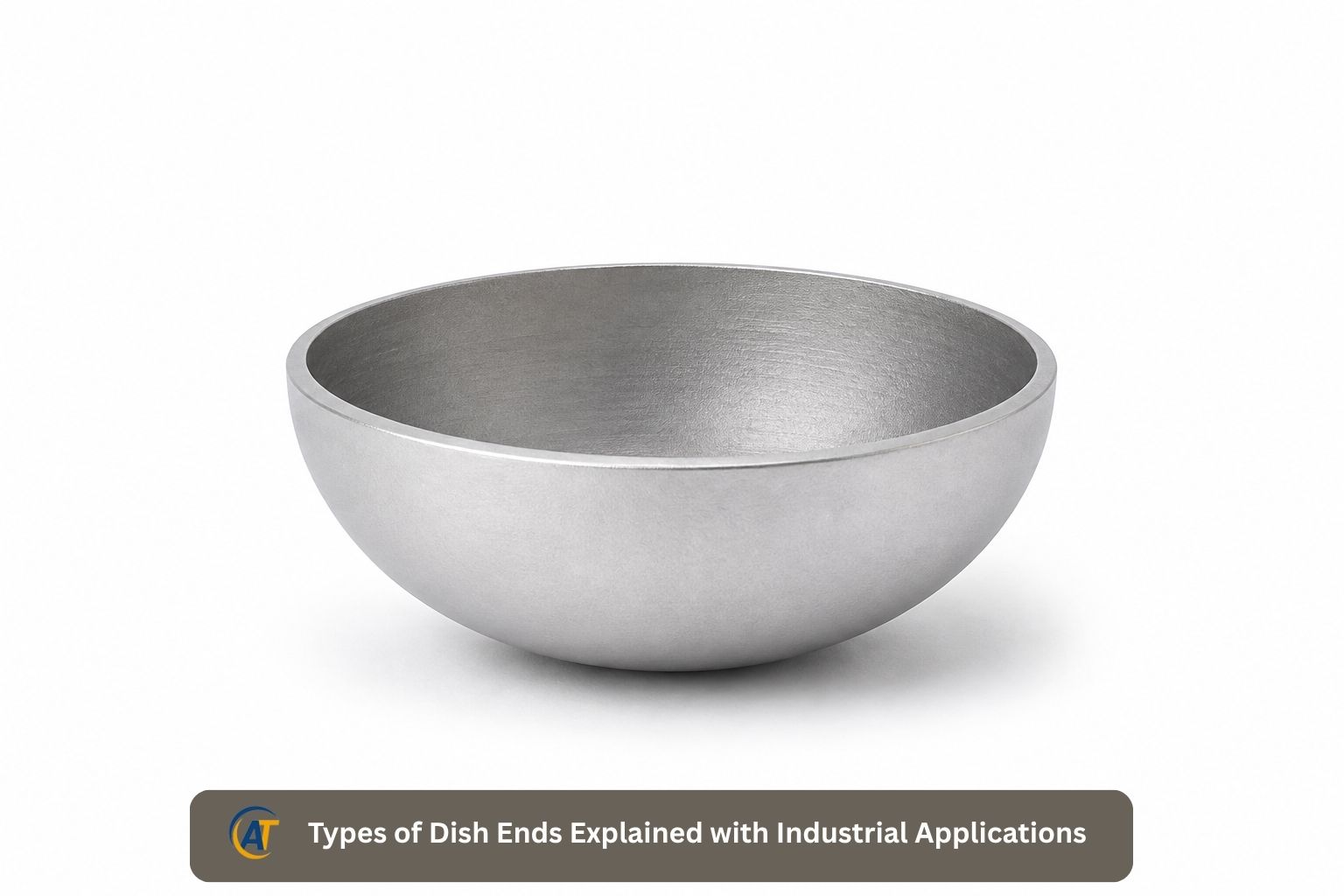
Dish ends are used to seal the cylindrical shell of pressure vessels and storage tanks, and to withstand internal pressure without failure at the seams. Different Industries have different dish end profiles. Depending on operating pressure, structural strength and fabrication cost. This article covers the five types used in a range of manufacturing sectors, torispherical, elliptical, hemispherical, flat and flanged designs, in addition to the factors that determine which profile is appropriate for a given vessel.
What Are Dish Ends?
A dish end is a curved head fitted to the end of a cylindrical vessel or tank in place of a flat plate that would concentrate stress at the edges. Chemical plants, refineries, and boilers rely on this curvature to spread internal pressure evenly across the surface instead of at a single seam. Flat plates crack under repeated pressure cycles; curved profiles push that load into the shell wall and cut fatigue at the joint. Manufacturers fabricate dish ends from stainless steel, carbon steel, and alloy steel, matching the grade to the process fluid and operating temperature. Choosing the right Industrial Dish Ends profile at the design stage prevents costly rework once fabrication begins.
Common Types of Dish Ends
Five dish end profiles cover most industrial requirements, each offering a different balance of pressure capacity, material usage, and fabrication cost for vessel designers.
Torispherical Dish Ends
Torispherical Dish Ends combine a spherical crown with a knuckle radius, the most widely fabricated head design in the industry. Fabricators press this shape from a single blank, keeping tooling costs low. Storage tanks and process vessels rated below 15 bar use this profile.
Elliptical Dish Ends
Elliptical Dish Ends carry a 2:1 major-to-minor axis ratio that spreads stress more evenly than a torispherical head. That geometry adds structural strength at higher design pressures. Chemical and pharmaceutical plants specify this shape for vessels rated above 10 bar.
Hemispherical Dish Ends
Hemispherical Dish Ends distribute stress uniformly across the curved surface, giving them the highest pressure rating among dish end shapes. Forming a half-sphere demands more raw material and deeper pressing. Reactors and gas storage spheres rated above 60 bar specify this profile.
Flat Dish Ends
Flat dish ends suit low-pressure systems where structural load stays minimal. Fabrication needs only a straight cut and edge preparation, no pressing equipment. Small tanks and utility equipment use this design to keep unit costs down.
Flanged and Dished Ends
Flanged and dished ends pair a straight flange section with a curved head, adding mechanical strength at the weld line. The flange allows a cleaner fit to the vessel shell during assembly. Fabricators specify this type across general industrial vessel construction.
Industrial Applications of Different Dish Ends
Dish end selection changes by sector because each industry runs its own pressure range, temperature profile, and hygiene standard for the vessels it operates.
Chemical Processing
Reactors, mixing vessels and storage tanks in chemical plants use elliptical and torispherical heads to handle corrosive media under sustained pressure cycles.
Oil and Gas Industry
Pressure vessels, separators and process equipment on oil and gas sites specify Pressure Vessel Dish Ends rated for sour service and high working pressure.
Food and Beverage Industry
Mixing tanks, dairy processing vessels and beverage storage tanks use polished stainless steel heads that meet hygiene standards for direct product contact.
Pharmaceutical Industry
Sterile processing tanks, pressure vessels and reactor vessels in pharmaceutical manufacturing depend on smooth, crevice-free dish ends that support clean-in-place validation.
Power Plants
Boilers, heat exchangers and steam vessels in power generation use hemispherical and torispherical heads engineered for continuous high-temperature service.
Why Material Selection Matters
Grade selection determines how long a dish end lasts in service and how much maintenance the vessel needs over its working life. Stainless Steel Dish Ends resist pitting and stress corrosion in chloride-heavy or sanitary environments where carbon steel would degrade within a few years. Alloy steel grades hold mechanical strength at temperatures above 400°C, a range carbon steel cannot sustain without creep. Carbon steel remains the lower-cost option for vessels running at moderate temperatures and neutral pH. Each grade trades upfront cost against corrosion resistance, temperature tolerance, and the frequency of inspection the vessel will need.
Conclusion
Dish end selection comes down to matching pressure rating, material grade, and fabrication method to the vessel’s actual operating conditions. Astec Tubes supplies stainless steel, carbon steel, and alloy steel dish ends for process industries across the country. Contact our team for a quote on your vessel’s pressure rating and material grade.