
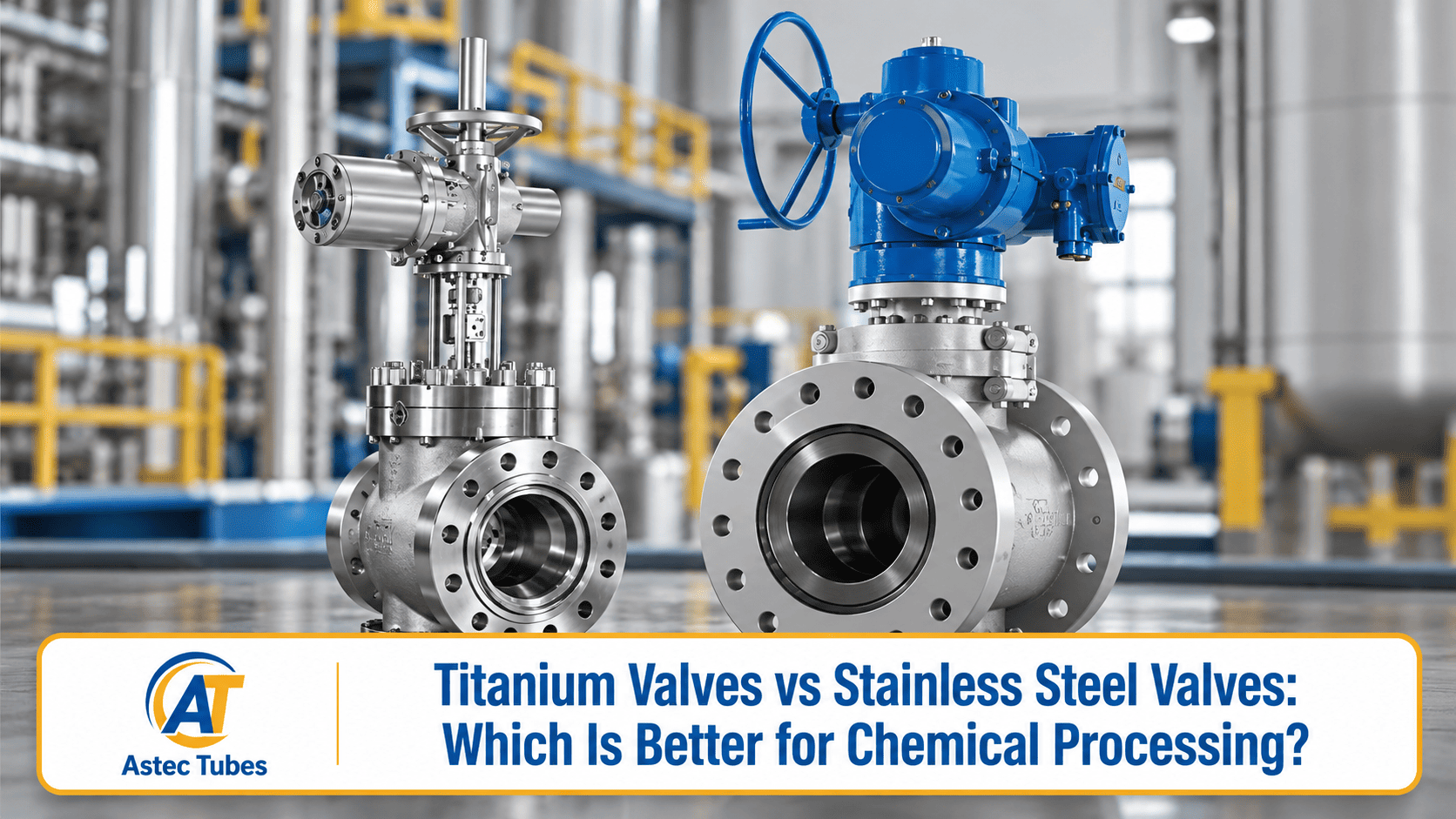
Valve material decides whether a chemical processing line runs for a decade or fails within a season. Pick wrong, and corrosion damages the wetted parts, leaks start, and the plant loses production hours it can’t recover. Titanium valves and stainless steel valves sit at the centre of this decision, and each brings a different mix of corrosion resistance, mechanical strength, and cost to the table. One resists chloride attack where the other pits. One costs less up front where the other lasts longer in punishing service. The right answer never comes from the material name alone. It comes from the process fluid, its concentration, the operating temperature, and the system pressure, all weighed together before a single valve is specified.
What Are Titanium and Stainless Steel Valves?
Titanium valves is used in systems where corrosion resistance matters more than almost anything else, particularly across selected chloride-rich and oxidizing environments that would quickly degrade lesser materials. Operators reach for them when a process damages ordinary metals.
Stainless steel valves take a broader role. Manufacturers commonly build them from grades such as 304 and 316/316L, which strike a workable balance between corrosion resistance, mechanical strength, ready availability, and cost. That balance explains why they show up across so many plants.
Material choice doesn’t stop at the valve body. The internal trim, the seats, the seals, and every other wetted component must each stand up to the process fluid. A titanium body paired with an incompatible seat still fails at the seat. Compatibility runs through the whole assembly.
Titanium Valves vs Stainless Steel Valves: Key Differences
The table below sets the two materials side by side across the parameters that most often drive a specification decision.
| Parameter | Titanium Valves | Stainless Steel Valves |
| Corrosion Resistance | Excellent in many chloride-rich and selected oxidizing environments | Good in many industrial environments; depends on grade and fluid |
| Weight | Lower density | Higher density |
| Strength | Depends on titanium grade and valve design | Depends on stainless steel grade and valve design |
| Chemical Compatibility | Strong in selected corrosive services; not suitable for every acid | Suitable for many process fluids, but some chemicals require alternative materials |
| Initial Cost | Generally higher | Generally lower |
| Availability | May require more specialized sourcing | Common grades are widely available |
| Typical Selection Priority | Demanding corrosion environments and weight-sensitive systems | General industrial service and cost-conscious projects |
Actual suitability tracks back to the specific chemical and the operating conditions it runs under.
How Do Titanium and Stainless Steel Compare in Corrosive Chemicals?
- Chloride-rich solutions and seawater: Titanium holds up extremely well across many of these environments, while stainless steel can suffer pitting or crevice corrosion depending on the grade selected and the conditions it faces.
- Oxidizing chemicals: Titanium may suit selected oxidizing media, though its performance still depends on the concentration present and the temperature at which the system operates.
- Acids and reducing chemicals: Titanium is not suitable for every acid. Hydrofluoric acid and certain strongly reducing environments can attack it severely and should rule it out.
- General chemical processing: Stainless steel 316/316L handles many process fluids adequately, but anyone specifying it must verify compatibility against the actual concentration and temperature in service.
Check reliable corrosion data against your exact conditions before you commit to either material.
When Should You Choose Titanium Valves?
Titanium valves deserve serious consideration in chloride-rich or seawater-related process systems, where their corrosion resistance directly extends service life. They also earn their cost in selected chemical processes that leave stainless steel without adequate protection. Plants weigh them heavily where corrosion-related downtime carries steep operational costs, since a longer-lasting valve offsets its higher price through uptime. Weight-sensitive systems that still demand suitable mechanical properties round out the typical case for titanium. Whatever the application, engineers must select the correct titanium grade for the service. Seats, seals, and other wetted components need their own separate compatibility checks, because the grade that protects the body won’t automatically protect every internal part.
When Are Stainless Steel Valves a Better Option?
Stainless steel valves make practical sense for general chemical handling, water treatment, and process systems where the chosen grade delivers adequate corrosion resistance for the duty. Their comparatively lower initial cost frees up budget for the rest of the system. Broad availability of common grades keeps lead times short and sourcing simple, and decades of established industrial use mean the engineering support and data already exist. One caveat holds firm: 316/316L does not suit every chloride concentration, every acid, or every elevated-temperature environment. Confirm material compatibility against the real service conditions before you rely on it.
How to Select the Right Valve Material
Work through these points before you finalise any valve material with Astec Tubes:
- Identify the chemical, its concentration, any impurities present, and the operating temperature.
- Confirm the operating pressure and the valve type the system requires.
- Check compatibility across the body, trim, seat, seal, and gasket together.
- Weigh corrosion risks, maintenance demands, and full lifecycle cost.
- Apply the relevant design standards, obtain material certificates, and define the testing requirements up front.
Conclusion
Titanium valves often prove the stronger choice for selected aggressive corrosive environments, where their resistance to chloride and oxidizing attack keeps a system running when stainless steel would fail. Stainless steel valves hold their ground as a cost-effective option across the many process fluids they handle well. Base the decision on verified operating conditions, and the material will match the service. Explore the titanium valves product page from Astec Tubes to specify the right fit for your process.