
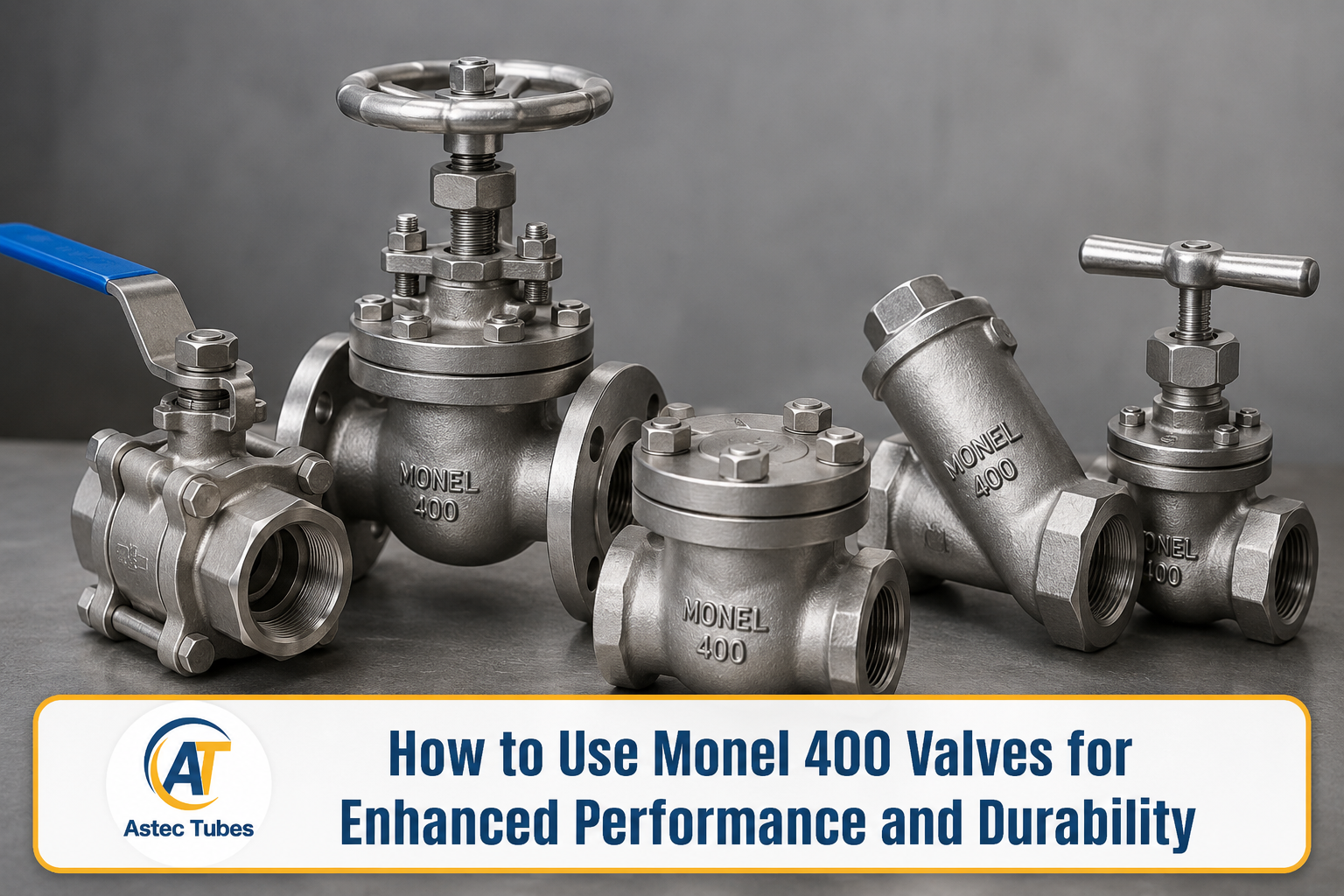
Valve material selection is one of those decisions where hasty decisions can lead to failure. In industries where process media is corrosive or where operating conditions fluctuate between temperature extremes and high pressures, a wrong material choice leads to frequent replacements, leakage incidents, and unplanned downtime. Monel 400 valves are used specifically in situations where standard stainless steel or alloy valves don’t hold up reliably.
Monel 400 is a nickel-copper alloy with composition at roughly 63% nickel minimum and copper ranging from 28% to 34%. Its corrosion resistance comes from the nickel-copper matrix itself, which holds up in reducing acid environments, seawater, and brackish water conditions.
These valves are used across marine systems, offshore platforms, chemical processing plants, oil and gas pipelines, desalination units, and power generation facilities.
Why Monel 400 Valves Are Preferred in Corrosive Environments
Stainless steel valves, particularly 304 and 316 grades, handle a reasonable range of corrosive service. But they break down in chloride-heavy environments through pitting and crevice corrosion. Stress corrosion cracking is another common failure mode in austenitic grades exposed to chloride at elevated temperatures. Monel 400 doesn’t crack the same way.
In seawater, the nickel-copper matrix resists pitting at flow velocities and temperatures typical of marine service. Erosion resistance is also higher, which matters in systems where process media carries particulates. Against reducing acids like hydrofluoric acid and hydrochloric acid at moderate concentrations, Monel 400 holds up considerably better than standard stainless grades. The result is fewer replacements, less maintenance intervention, and lower risk of unexpected valve failure in critical process lines.
How to Select the Right Monel 400 Valves for Your Application
Getting the selection right starts with knowing the process conditions. Pressure ratings, temperature range, media composition, flow requirements, and the consequences of failure all feed into this decision.
Pressure and Temperature Considerations
Monel 400 retains useful mechanical strength over a broad temperature range. Tensile strength at room temperature falls around 550 MPa for annealed material, with yield strength around 240 MPa. Valve pressure ratings need to match the maximum allowable working pressure of the system, including pressure spikes. Thermal cycling is a separate concern: if the valve body and seat materials have different thermal expansion coefficients, repeated cycling causes leakage over time. Matching seat material to the valve body, or selecting soft seat materials rated for the actual temperature range, manages this.
Media Compatibility
Monel 400 handles seawater, brackish water, hydrofluoric acid, dilute sulphuric acid, hydrochloric acid below certain concentration thresholds, and a range of organic chemicals. It does not perform well in strongly oxidising media. Concentrated nitric acid and aerated sulphuric acid will corrode the alloy. Before finalising valve selection, concentration, temperature, and aeration level of the process media should be checked against published corrosion data.
Valve Type Selection
Ball valves are used for tight shut-off in on/off service. They seat cleanly and work well in marine and offshore systems requiring full-bore flow.
Gate valves suit full-flow, non-throttling applications and are used for isolation service in oil and gas lines, often in sour gas or high-chloride environments.
Globe valves are the right choice where flow regulation is needed. They’re practical for chemical dosing lines and process control applications.
Check valves prevent backflow in marine cooling systems, chemical injection lines, and pump discharge applications.
Best Practices for Installing Monel 400 Valves
Correct installation is where a lot of service life gets lost. A good quality valve in a badly executed installation will still leak, corrode prematurely, or fail mechanically.
Pre-Installation Inspection
Check bore and seat surfaces for mechanical damage or contamination. Verify that pressure class, body rating, and end connection dimensions match the system specification. Material test certificates should be verified against the order specification.
Correct Handling and Storage
Monel 400 can be contaminated by contact with carbon steel tools or surfaces. Iron particles embedded in the alloy surface initiate localized corrosion attack. All handling tools and support surfaces should be stainless steel or non-ferrous. Store valves in a dry location with end caps in place.
Proper System Alignment
Pipe misalignment forces stress onto the valve body and flanges. Confirm that pipe ends are aligned before bolting up. Tighten flange bolts in a cross-pattern to distribute load evenly across the gasket face. Over-torquing distorts the flange and causes uneven compression.
Maintenance Tips to Improve the Durability of Monel 400 Valves
Monel 400 doesn’t require the same maintenance frequency as carbon steel in similar service, but a regular inspection schedule still matters.
Routine Inspection Practices
Inspect valve stems, packing glands, and seat areas during scheduled shutdowns. Look for weeping at the gland or flange face. Stiff operation can indicate stem corrosion, seat damage, or internal scaling. Early identification allows corrective action before full valve failure.
Cleaning and Corrosion Prevention
Clean Monel 400 surfaces with neutral pH or dilute alkaline cleaners. Avoid chlorinated cleaning agents. In fouling service, scale deposits can mask early corrosion and interfere with seat sealing. Mechanical cleaning with non-abrasive tools is preferred.
Timely Replacement of Internal Components
Soft seats, stem packing, and O-rings have a reliable life irrespective of valve body condition. Track service history and replace internal components proactively. Waiting for a visible leak means a larger intervention than a planned repack.
Common Challenges When Using Monel 400 Valves
Most Monel 400 valve failures come from selection errors, improper installation, or deferred maintenance rather than material inadequacy.
Improper Valve Selection
Using a valve with an insufficient pressure rating for actual operating conditions is the most direct route to early failure. In systems with pressure spikes, the maximum operating pressure needs to account for surge conditions. Using a gate valve for throttling duty accelerates wear and causes seal degradation.
Exposure to Unsuitable Chemical Conditions
Monel 400 is not the correct choice in strongly oxidizing acid service. For concentrated nitric acid or high-temperature aerated sulphuric acid applications, higher-alloy materials with better oxidizing acid resistance are appropriate. Consult a corrosion engineer when media conditions fall outside the standard Monel 400 service range.
Poor Installation and Maintenance Practices
Galvanic coupling with less noble metals accelerates corrosion on Monel 400 surfaces. Insulating gaskets and sleeves break the galvanic circuit in mixed-metal systems. Deferred gland repacking is a common problem: a weeping gland left in service leads to stem corrosion at the packing interface, eventually requiring stem replacement rather than a simple repack.
Performance Benefits of Properly Used Monel 400 Valves
A Monel 400 valve that has been correctly selected, installed, and maintained will typically outlast a stainless steel valve by a significant margin in aggressive service. In marine and offshore applications, service life differences of 2x to 3x over 316 stainless are not unusual in seawater or high-chloride conditions.
Reduced maintenance frequency lowers total cost of ownership. Fewer replacements mean fewer process line isolations, less safety planning overhead, and a smaller emergency spares inventory. System reliability improves when critical valves are not a recurrent maintenance item. Valve leakage in sour gas or hydrofluoric acid service carries personnel safety and environmental exposure risk. A correctly specified Monel 400 valve is less likely to create those risks.
Conclusion
Monel 400 valves perform well in corrosive, high-pressure, and temperature-variable industrial environments. The alloy’s properties give it a practical advantage over standard stainless and alloy grades in marine, chemical, and oil and gas service. That advantage depends on getting the selection, installation, and maintenance right.
Correct valve type selection, pressure and temperature rating verification, media compatibility checking, proper installation, and a consistent maintenance schedule all need to be in place. At Astec Tubes, we supply Monel 400 valves with full material documentation and traceability. Contact us with your application details for the right valve specification.