
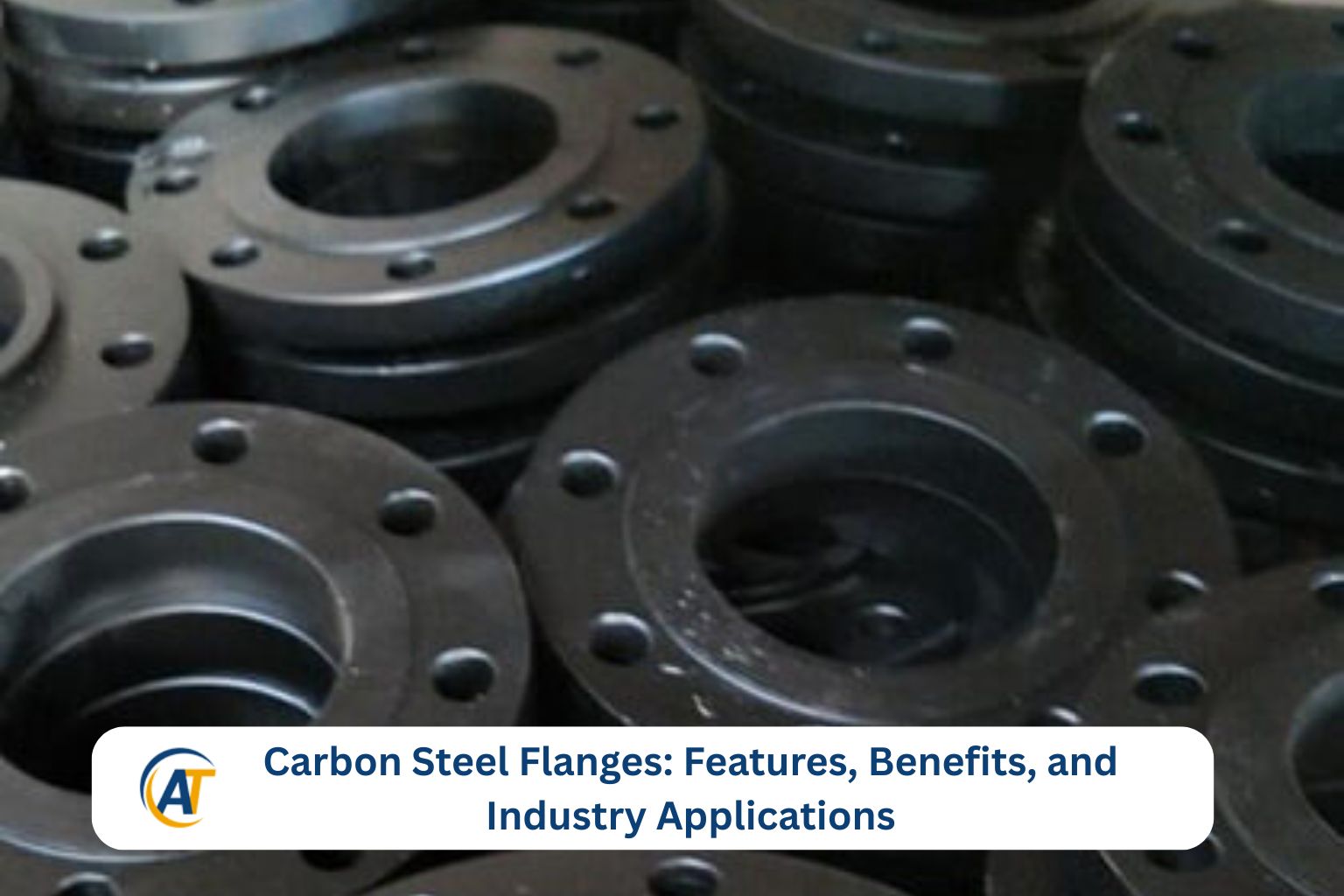
Most piping failures happen at the joints, not along the straight run of pipe. That’s why flange material matters so much in industrial design. Industries handling high-pressure and high-temperature operations often prefer Carbon Steel Flanges due to their excellent mechanical strength, reliability, and cost efficiency. From refineries to power plants, these components hold piping networks together under conditions that would stress lesser materials.
What Are Carbon Steel Flanges?
A flange is used to connect pipes, valves, pumps and other equipment to form a complete piping system, which allows easy access for cleaning, inspection and modification without cutting the line. Carbon steel flanges are among the most specified flange types across heavy industry. The alloy is mostly iron and carbon, with small amounts of manganese added, and this gives a balance of strength and machinability that’s hard to match at the price.
Plants running high-pressure steam lines, crude oil transfer systems, or large-diameter water mains tend to go with carbon steel because it holds up under repeated thermal cycling and mechanical load. It’s strong, durable, and cost-effective, so it ends up being the practical choice rather than a compromise. Getting the flange material wrong can lead to premature failure or unplanned shutdowns. It’s a safety decision as much as an engineering one.
Key Features of Carbon Steel Flanges
High Mechanical Strength
Carbon steel flanges can bear heavy mechanical loads and can sustain continuous pressure without permanent deformation. ASTM A105 flanges are one of the most popular grades providing a minimum tensile strength of 70,000 PSI. The load bearing capacity is suitable for pipelines, structural piping supports and equipment connections in demanding environments.
Durability and Long Service Life
Properly specified carbon steel flanges resist wear even under vibration, pressure cycling, and mechanical stress. Many installations run for 20 to 30 years before needing replacement, which cuts down on shutdowns needed purely for flange maintenance.
Temperature and Pressure Resistance
Standard carbon steel flanges work reliably across pressure classes from 150# to 2500#. On temperature, they handle applications up to around 425°C in typical service, which suits steam systems and process piping without needing exotic alloy upgrades.
Easy Fabrication and Welding
Properly rated gaskets and torqued carbon steel flanges will seal sufficiently to hold up under repeated cycling of the pressure. Welding does not need the specialist filler metals or preheat procedures that some stainless or nickel alloys require. It cuts down project time frames and cuts down on maintenance issues down the road.
Cost-Effective Material Choice
Raw material costs for carbon steel run well below specialty alloys like stainless steel, Inconel, or duplex steel, often by 40% to 60%. On large-scale projects with hundreds of flange connections, that gap adds up to real budget savings without giving up strength.
Benefits of Using Carbon Steel Flanges
Economical Solution for Industrial Piping
Lower upfront material costs, in combination with broad availability, help keep project budgets in check, especially on large pipeline networks where flange count runs high.
Strong Leak-Proof Connections
Carbon steel flanges with properly rated gaskets and torqued to the appropriate specifications will seal sufficiently to hold under repeated pressure cycling. This reduces fugitive emissions and product losses.
Excellent Availability Across Industries
Carbon steel flanges ship in standard sizes from most stockists with minimal lead time. Specialty alloys, on the other hand, often need custom manufacturing runs of six to eight weeks.
Wide Range of Sizes and Pressure Ratings
From half an inch to 60 inches in diameter, and across pressure classes from 150# through 2500#, carbon steel flanges cover nearly every piping configuration a project might need.
Compatibility with Various Flange Designs
Weld neck, slip-on, blind, socket weld, lap joint, and threaded designs all come in carbon steel. This gives engineers flexibility to match flange type to application without switching materials.
Take a mid-sized refinery running 500 flange connections. Specifying carbon steel instead of stainless steel on non-corrosive service lines alone can cut material costs by tens of thousands of dollars, and standard availability keeps replacement parts on hand for routine turnarounds.
Understanding Material Selection in Flanges
Flange material selection determines how a piping system performs over its entire service life, not just on day one. Corrosive media, extreme temperatures and regulatory requirements drive engineers to different alloys. Where carbon steel is required for corrosive and hygienic applications, stainless steel is used. Alloy steel steps in when temperature or pressure service is beyond what carbon steel can take, and Inconel takes over in extreme heat or highly corrosive environments. Carbon steel stays the default for general industrial service and budget-conscious projects, where its strength and cost profile fit without overengineering the connection.
Industry Applications of Carbon Steel Flanges
Oil and Gas Industry
Carbon steel flanges are used at connection points on transmission lines in pipeline applications for crude oil and natural gas. Refineries use them in process units and offshore platforms specify them where strength under load is the most critical.
Petrochemical Plants
Process piping systems use carbon steel flanges to create secure, serviceable connections for feedstocks and intermediate chemicals. They are also used in storage facilities for tank farm piping and transfer lines.
Power Generation Facilities
Steam lines operating at high pressure and temperature need flanges that won’t fatigue under thermal cycling. Boiler systems and thermal power plants specify carbon steel flanges throughout their piping for this reason.
Water Treatment Plants
Distribution networks moving treated water across municipal systems use carbon steel flanges for their durability and lower cost over long pipeline runs. Pumping systems rely on them for connecting pumps to discharge and suction piping.
Construction and Infrastructure Projects
HVAC systems in large commercial buildings use carbon steel flanges to connect chillers, boilers, and ductwork piping. Industrial utility lines carrying compressed air or process water depend on the same connections.
Manufacturing Industries
Process equipment connections throughout manufacturing facilities, from reactors to heat exchangers, use carbon steel flanges to join equipment to piping networks. Continuous production lines need that reliability to avoid unplanned downtime.
Conclusion
Carbon steel flanges offer high mechanical strength, durability and a wide range of pressure and temperature ratings at a price that few alternative materials can match. As a result, they are used in oil and gas, petrochemical, power generation, water treatment, construction and manufacturing projects. Astec Tubes supplies carbon steel flanges from experienced manufacturers using quality raw materials and proven methods. Contact Astec Tubes today for a quote on your project requirements.