
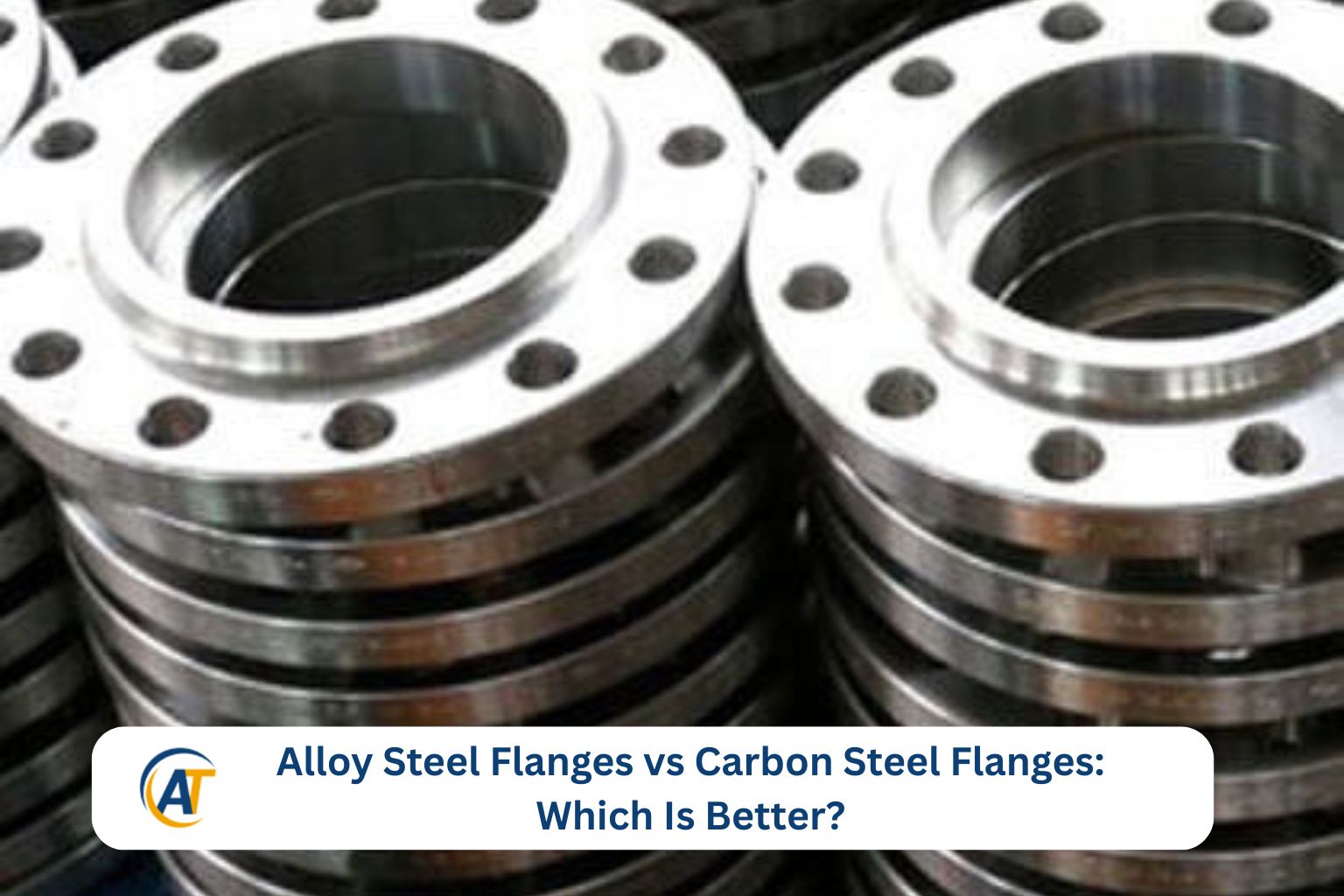
A flange failure rarely announces itself in advance. One mismatched gasket or one wrong material choice, and a piping system that cost months to design can leak, crack, or shut down a plant for days. That’s why the choice between Alloy Steel Flanges and Carbon Steel Flanges deserves more than a glance at price tags.
Flanges connect pipes, valves, and equipment while allowing easy disassembly for maintenance and inspection. They carry the full burden of internal pressure, external load, and thermal stress at every joint in a system. Get the material wrong, and the consequences show up as corrosion, fatigue cracking, or outright joint failure long before the rest of the pipeline wears out.
Material selection drives three outcomes directly: how long the flange lasts, how safely it performs under pressure, and how much the plant spends on unplanned downtime. Alloy Steel and Carbon Steel sit at opposite ends of the cost-versus-capability spectrum, and each wins in different operating conditions. This article compares both materials across composition, strength, corrosion resistance, temperature tolerance, service life, and total cost, so the decision comes down to engineering data rather than guesswork.
Alloy Steel Flanges vs Carbon Steel Flanges
Material Composition
Carbon Steel Flanges rely on carbon as the primary strengthening element, typically between 0.05% and 0.30%, with minimal additional alloying. Alloy Steel Flanges add chromium, molybdenum, nickel, or vanadium in controlled percentages to boost strength, toughness, and resistance to heat and corrosion. These added elements change how the metal behaves under stress, heat, and chemical exposure far more than carbon content alone ever could.
Mechanical Strength
Alloy Steel Flanges typically deliver tensile strength above 620 MPa, compared to roughly 415-485 MPa for standard Carbon Steel grades like A105. Yield strength follows the same pattern, with chromium-molybdenum alloys outperforming plain carbon steel by 20-30% in high-load joints. Wear resistance improves significantly too, since alloying elements form harder microstructures that resist abrasion. Heavy-duty applications, including compressors, turbines, and high-pressure reactors, lean on alloy grades for this exact reason.
Corrosion Resistance
Carbon Steel Flanges corrode faster in moist, acidic, or saline environments and usually need protective coatings, galvanizing, or paint systems to survive outdoor or marine exposure. Alloy Steel Flanges, particularly chromium-bearing grades, form a stable oxide layer that slows corrosion in chemical processing lines handling acids, sour gas, or hydrocarbons. Refineries and offshore platforms favor alloy grades specifically to cut the frequency of recoating and surface maintenance.
Temperature Resistance
Carbon Steel Flanges work well up to about 425°C, then strength drops off rapidly. Alloy steel flanges (especially chrome-moly like F11 and F22) maintain their mechanical properties at 540 degrees and higher and are the standard for boiler headers and high-pressure steam systems. Thermal stability matters most where temperature cycles repeatedly, since alloy steel resists creep and microstructural breakdown far longer under cyclic heat than plain carbon steel does.
Durability and Service Life
Alloy Steel Flanges are more resistant to fatigue cracking due to repeated pressure cycling because they have a finer, more uniform grain structure than Carbon Steel. Pressure and temperature are limited to a narrow range for steady, moderate duty pipelines where Carbon Steel is still doing a good job. Alloy grades equal longer maintenance intervals in tough service. Carbon steel needs to be checked more frequently once exposed to corrosive or high cycle conditions.
Cost Comparison: Which Offers Better Value?
Carbon Steel Flanges are 30-50% less expensive to purchase initially than equivalent Alloy Steel Flanges and are therefore the usual choice for standard pressure, moderate temperature, non-corrosive pipelines. Installation costs run similar for both materials, since machining and welding procedures don’t differ dramatically at this stage. The gap widens after commissioning: carbon steel in a corrosive or high-temperature line needs recoating, more frequent gasket replacement, and shorter inspection cycles, all of which add up over a 10-15 year service window. Alloy steel costs more to purchase but stretches replacement cycles and cuts unplanned shutdowns in demanding service, often delivering a lower total cost of ownership despite the higher sticker price. For low-stress applications, carbon steel still wins on ROI simply because the extra durability of alloy steel goes unused.
Which Flange Material Should You Choose?
Operating pressure and temperature should be the first two filters in this decision. Systems running above 425°C or cycling through frequent temperature swings call for Alloy Steel Flanges, while stable, moderate-pressure lines rarely justify the added cost. A corrosive environment, whether from acids, sour gas, or saline exposure, tips the balance toward alloy grades even at moderate temperatures, since coating failures on carbon steel happen faster than most maintenance schedules can catch. Project budget and maintenance expectations are just as important as the engineering specs. A tight capital budget with strong ongoing maintenance support can still make carbon steel workable in borderline conditions. Industry standards such as ASME B16.5 and ASTM A105 (carbon) or A182 (alloy) frequently specify the baseline grade for a particular application, so confirming code compliance before settling on a material reduces the need for rework later. Refineries, power plants, and offshore platforms typically standardize on alloy steel, while water treatment, HVAC, and general industrial piping run efficiently on carbon steel.
Conclusion
Neither material wins outright; the right answer depends entirely on what the pipeline has to survive. Carbon Steel Flanges deliver solid performance at a lower cost for standard pressure, moderate temperature, non-corrosive systems, making them the practical choice across a wide range of industrial and commercial projects. Alloy Steel Flanges justify their cost premium in high temperature, high pressure or corrosive service where the additional strength and resistance to heat are directly translated into fewer failures and longer periods between replacements. It’s a matter of matching material properties to actual operating conditions.
Astec Tubes supplies both grades to exact project specifications, sourced from vendors who manufacture to recognized industry standards. Contact Astec Tubes to get the right flange grade specified for your operating conditions and budget.